A project to support mainstreaming of biodiversity objectives across cities and regions
The project enables governments at all levels – from local to national – to integrate their efforts for mainstreaming biodiversity and ecosystem services into core subnational government functions such as spatial planning, land-use management, local economic development and infrastructure design. It further supports city-regions to understand and unlock, within their specific local context, the potential of nature to provide essential services and new or enhanced economic opportunities, while simultaneously protecting and enhancing the biodiversity and ecosystems on which these services and opportunities depend. Such actions place the participating city-regions on a more resilient and sustainable development path. The project is originally implemented in 3 countries and 3 or 4 cities per country: Dar es Salaam, Dodoma, Moshi & Arusha in Tanzania; Campina, Belo Horizonte & Londrina in Brazil; and Kochi, Panjim & Gantok in India. And 3 new project countries joined for the extension project, which are China, Colombia and South Africa.
Nature provides many diverse life-supporting and life-enhancing contributions to people in cities and their surrounding regions. In cities of the future, nature should be fully integrated into all aspects of urban life to provide a range of inter-connected benefits.
The INTERACT-Bio project, led by ICLEI – Local Governments for Sustainability, and supported by the German Federal Ministry for the Environment, Nature Conservation and Nuclear Safety (BMU) through the International Climate Initiative (IKI), was designed to improve the utilization and management of nature within fast-growing cities and the regions surrounding them, by providing expanding urban communities in the Global South with nature-based solutions and associated benefits.
INTERACT-Bio is being implemented in the following countries. See which cities below.
Campinas
Campinas is located in the southeast in a strategic watershed and is part of the Cantareira Water System, which supplies water for the sprawling State of São Paolo. Recently, the region has suffered from a major water crisis, with extremely low water levels and near the brink of collapse.
Belo Horizonte
Located in the southeast, Belo Horizonte is home to eleven private ecological reserves and numerous public green areas like parks and gardens. The Metropolitan Region of Belo Horizonte has 5.8 million inhabitants distributed across 34 municipalities. It faces socio-spatial segregation resulting from urban sprawl that leads to unequal access to services and broader inequalities.
Londrina
Located in the south and covered by the Atlantic Forest, the Metropolitan Region of Londrina has three state-owned parks and a rich hydrographic network, including the Paranapanema and Tibagi Rivers. Londrina faces increased pressure from urban development and aims to protect its important biodiversity while managing increased urbanization.
Chengdu
Kunming
Valle de Aburrá
Bucaramanga
Barranquilla
Kochi
Located in the southwest, Kochi is home to a mangrove bird sanctuary. Vembanad Lake, the largest Ramsar wetland in South India, can also be found nearby. These biodiversity sites face challenges from rapid urbanization and unplanned growth, clogging and blocking of natural canals due to waste, and a lack of coordination in tackling these serious problems.
Gangtok
Nestled in the Eastern Himalayas, a global biodiversity hotspot, the city of Gangtok hosts rich biodiversity. The city has an orchid sanctuary and lies in close proximity to five more protected areas. The city biodiversity is severely threatened by rapid urbanization, unplanned development and dumping of solid waste.
Panaji
Panaji is situated in the southwest amongst four wildlife sanctuaries. Panaji has seen clogging and blocking of the St. Inez Creek in the region due to solid waste dumping. The city has also felt the effects of climate change and rapid urbanization.
Mangaluru
Mangaluru is situated in the southwest near the Western Ghats and the Netravathi-Gurupura Estuary, which hosts rich aquatic life and at least 25 mangrove patches. Mangaluru has begun to see the effects of climate change and struggles with rapid urbanization and lack of awareness of the crucial importance of local biodiversity.
Overberg District Municipality
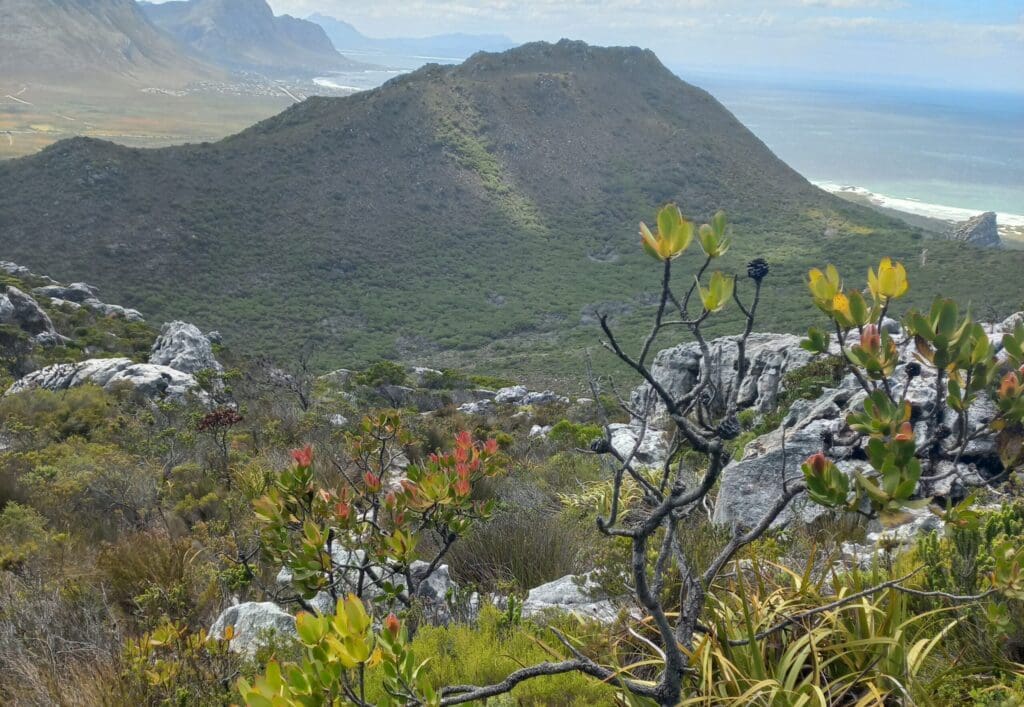
The Overberg District Municipality governs the Overberg Region of the Western Cape, South Africa. Its head office is situated in the town of Bredasdorp. The boundaries of the Overberg are the Hottentots-Holland mountains in the West, the Riviersonderend Mountains in the North, the Atlantic and Indian Oceans in the South and the Breede River in the East. The district municipal area covers 12,241 km2 and currently has an estimated population of 300,285 people in 86,716 households.
Cape Agulhas Municipality
Cape Agulhas is a coastal municipality (178 km of coastline) flanked by the Indian and Atlantic Oceans including where these oceans meet at the iconic southern tip of Africa at L’Agulhas.
Overstrand Municipality
Known for its dramatic coastline, Overstrand is home to over 130,000 residents, and numerous rivers, estuaries, wetlands and agricultural areas.
Waterberg District Municipality
uMkhanyakude District Municipality
Dodoma
Dodoma City, the administrative capital of Tanzania, is located in the heartland of Tanzania, on the East African Plateau. The City boasts a rich agricultural heritage, including vineyards and livestock farming. Dodoma’s rocky outcrops are special among the world’s ecosystems.
Arusha
Arusha is situated in northern Tanzania below Mount Meru on the eastern edge of the Great Rift Valley. The city is located near some of the greatest national parks and game reserves in Africa, including Serengeti National Park and Ngorongoro Conservation Area. Arusha has a long track record of biodiversity awareness and has committed to conserving natural assets, but faces challenges such as deforestation and rapid unplanned urban growth.
Dar es Salaam
Dar es Salaam, Africa’s fastest growing city, is situated in the eastern region of Tanzania on the Indian Ocean. The city boasts several natural habitat elements such as mangroves, marines systems, coastal forests and wetlands, but faces challenges such as coastal erosion, poor waste management, polluted waters and harmful unregulated fishing practices.
Moshi
The municipality of Moshi is situated in northern Tanzania near the Kenyan border, on the lower slopes of Mount Kilimanjaro. The municipality has invested in integrating natural elements through city greening, but faces challenges of waste management, pollution due to plastics in the environment, and development activities along river banks.